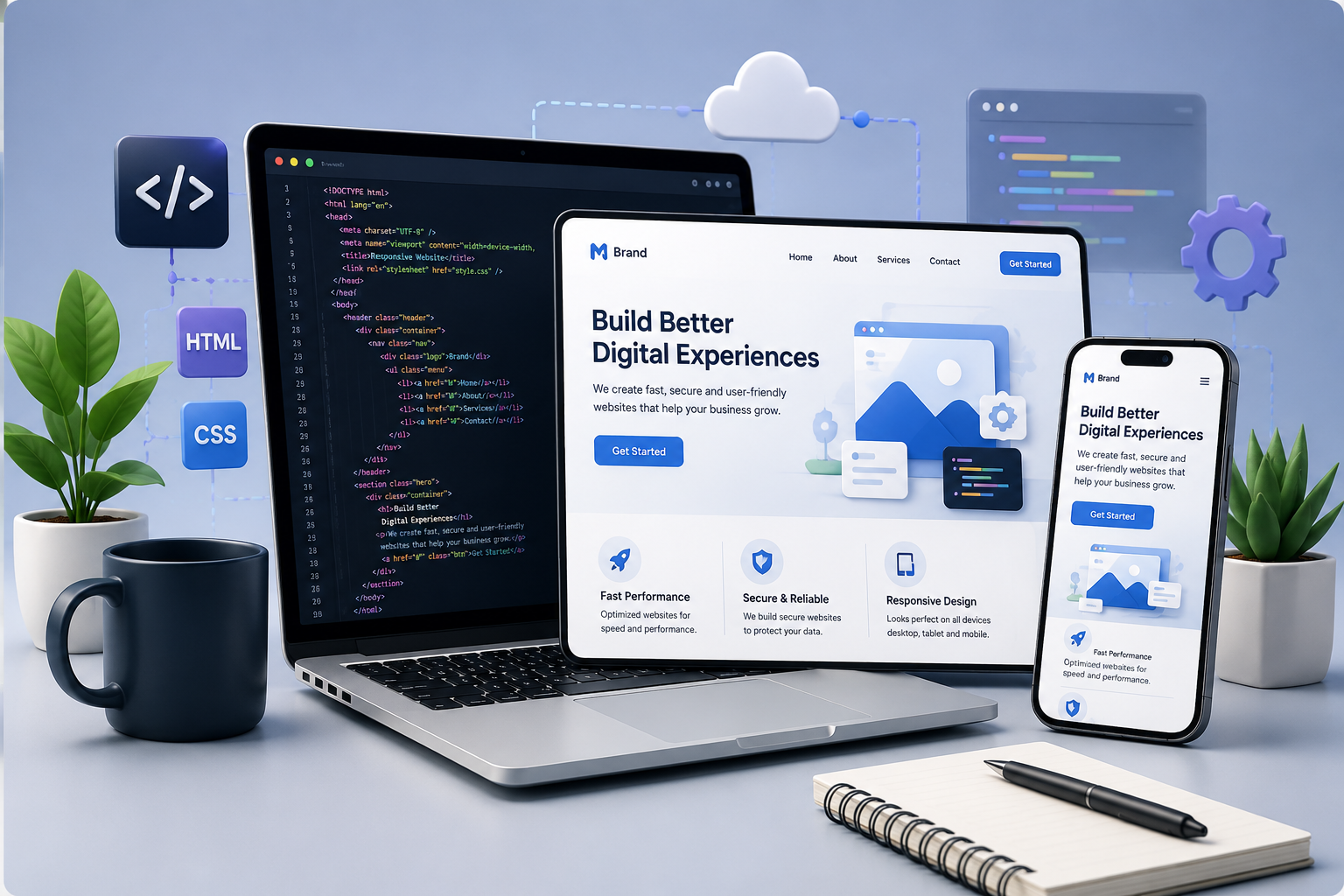
A professional website is more than an online introduction to your business. It can help potential customers understand your services, find important information, contact your team and build confidence in your company.
What Is Web Development?
Web development is the process of creating, building and maintaining websites and web-based applications. It covers both the visual experience visitors interact with and the technology working behind the scenes.
A professionally developed business website may include responsive layouts, contact forms, service pages, content management tools, performance optimisation, security features and integrations with other business systems.
Why Is Web Development Important for Small Businesses?
Potential customers often research a company online before deciding whether to contact it. A slow, outdated or confusing website can make it difficult for visitors to understand what a business provides.
A well-developed website can help a small business:
- Build a professional online presence
- Clearly explain products and services
- Work effectively on mobile, tablet and desktop devices
- Make it easier for customers to contact the business
- Improve website performance and usability
- Create a technical foundation for search engine optimisation
- Support additional services and future business growth
Responsive Web Development
Modern websites need to function across many different screen sizes. Responsive development allows website layouts, navigation, images and content to adapt automatically to smartphones, tablets, laptops and desktop computers.
This approach helps provide visitors with a more consistent experience without requiring businesses to maintain separate websites for every type of device.
Website Speed and Performance
Website performance plays an important role in user experience. Visitors may leave a website when pages take too long to load or elements do not respond properly.
Developers can improve website performance by optimising images, reducing unnecessary scripts, using efficient code, implementing appropriate caching and selecting suitable hosting infrastructure.
Performance should therefore be considered during development rather than treated only as a task after a website has been completed.
Website Security
Security is an important part of maintaining a professional business website. Appropriate security practices help reduce unnecessary exposure to common website risks.
These practices may include using HTTPS, maintaining software updates, applying suitable access controls, creating regular backups and monitoring websites for unusual activity.
No website can be guaranteed to be completely immune from security risks, but established security practices can help businesses manage those risks more effectively.
SEO-Friendly Website Structure
Search engine optimisation does not begin only after a website has been published. The way a website is structured and developed can influence how easily both visitors and search engines understand its content.
An SEO-friendly website commonly includes:
- Logical website navigation
- Descriptive page titles
- Clear H1, H2 and H3 headings
- Readable URLs
- Useful and original content
- Optimised images
- Relevant internal links
- Mobile-friendly layouts
- Good website performance
Technical SEO and useful content can then work together as part of a broader search visibility strategy.
Choosing the Right Web Development Approach
Different businesses require different types of websites. A local service business may need a professional informational website, whereas another company may require e-commerce functionality, appointment systems, customer portals or custom integrations.
Before beginning development, a business should identify its target audience, primary objectives, required functionality, available content and possible plans for future expansion.
Building a Website for Long-Term Growth
A business website should be created with future requirements in mind. Adding services, publishing educational content, improving SEO or integrating new tools should not require rebuilding the entire website every time the business grows.
A flexible and organised website structure makes these improvements easier to manage over time.
Frequently Asked Questions
How long does it take to develop a business website?
Development time depends on the website size, functionality, content requirements, integrations and revision process.
Does a small business need a mobile-friendly website?
Responsive design helps visitors access and navigate a business website effectively across different screen sizes.
Can web development help with SEO?
Good development can provide the technical foundation for SEO through performance, mobile usability, site structure and crawlability. Search rankings, however, depend on many additional factors.
How often should a business website be updated?
Businesses should regularly review their website and update software, security components, service information, contact information and content whenever necessary.
Planning a Business Website?
Techno E Solutions provides web development services designed around individual business requirements, from responsive websites to ongoing website improvements.
Discuss Your Website Project →